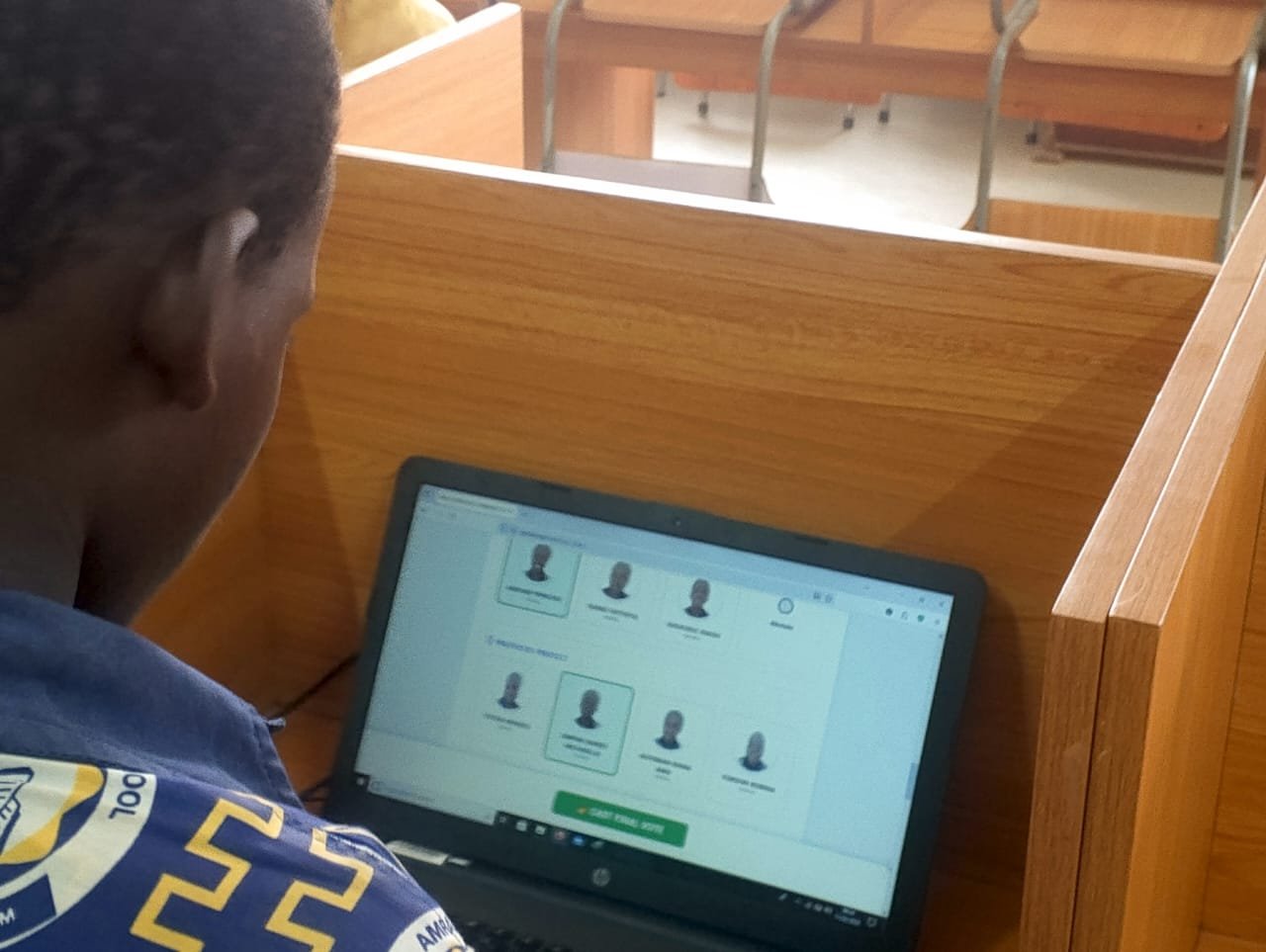
Every year, schools across Ghana’s education sector hold elections, and the challenges associated with manual systems are boundless. From election fraud and general confusion to incorrect vote tallies, the risks are high. The introduction of E-Voting for School Elections by SkulManager is a definitive game-changer.
As student leadership becomes more dynamic, the traditional "paper and pen" method is becoming a relic of the past. From JHS and SHS campuses to university departmental associations, the demand for transparency and speed is at an all-time high. The SkulManager E-Voting system was specifically designed to eliminate the pain and struggles schools face when conducting elections.
A Success Story: Amrahia Community School
One institution that has already witnessed the efficiency of this portal is Amrahia Community School, located on the Dodowa Road at the Otinibi Junction. In less than 15 seconds after the polls ended, the final results were confirmed with a single button press in the school’s "Strong Room," where the live data was monitored.
Behind the Innovation
The SkulManager E-Voting System is a robust, custom-built solution designed specifically for the Ghanaian educational landscape and beyond. It was developed by Mr. Wisdom Hammond, a gifted, self-taught AI prompt engineer and solution architect. Leveraging his background in WordPress design and a deep understanding of CSS, HTML, SQL and AI, he built the entire SkulManager education ecosystem from scratch using hard-coding and advanced prompt engineering.
Why Transition to Digital Voting?
Manual counting is prone to human error, "spoilt ballots," and long delays that can spark tension among students. By using a digital portal, school administrations ensure that every vote is accounted for and results are declared within seconds of the polls closing.
Step-by-Step: How to Use the SkulManager Election Portal
1. School Onboarding The journey begins at SkulManager.com. Once you register your school or association, you gain instant access to a dedicated election portal for 100 days. This period covers everything from the filing of nominations to the final declaration of results.
2. Configuring the Ballot Administration is simple and requires no advanced IT expertise:
-
Categories: Create positions such as School Prefect, Girls' Prefect, or Compound Overseer.
-
Candidate Profiles: Upload candidate names and photos. In Ghana, visual recognition is vital for younger voters to identify their choice quickly.
3. Token Generation and Distribution To prevent multiple voting, the system generates Secret Tokens. These are unique codes assigned to each student. As a Lead Consultant for Education-News, I have seen how this feature builds trust; students know that once a token is used, it cannot be reused. Administrators can easily print these tokens along with simple instructions.
4. The Execution: Casting the Vote On election day, the "polling station" can be anywhere. Students can vote via:
-
School ICT Lab desktops
-
Tablets
-
Mobile phones (via a secure browser link)
The interface is clean and mobile-responsive, ensuring that even students with basic digital literacy can navigate the ballot successfully.
The "Strong Room" Concept
During the election, the institution can designate a specific office as the Strong Room. Here, live results as they populate in the system can be displayed on a Smart TV or projector.
In this room, election observers and staff of the Electoral Commission can monitor changing voting patterns in real-time. To maintain the integrity of the process, no one is allowed to leave the Strong Room until the polls close, and officers are strictly prohibited from divulging early trends. This prevents "influence voting," where yet-to-vote students might change their minds based on leaked preliminary results.
5. Instant Declaration of Results The moment the voting window expires, the administrator closes the polls. There is no waiting for hours of manual counting or recounting. The system automatically generates a Certified Results Document that can be printed and displayed on notice boards immediately.
This level of efficiency is what truly transforms school democracy.